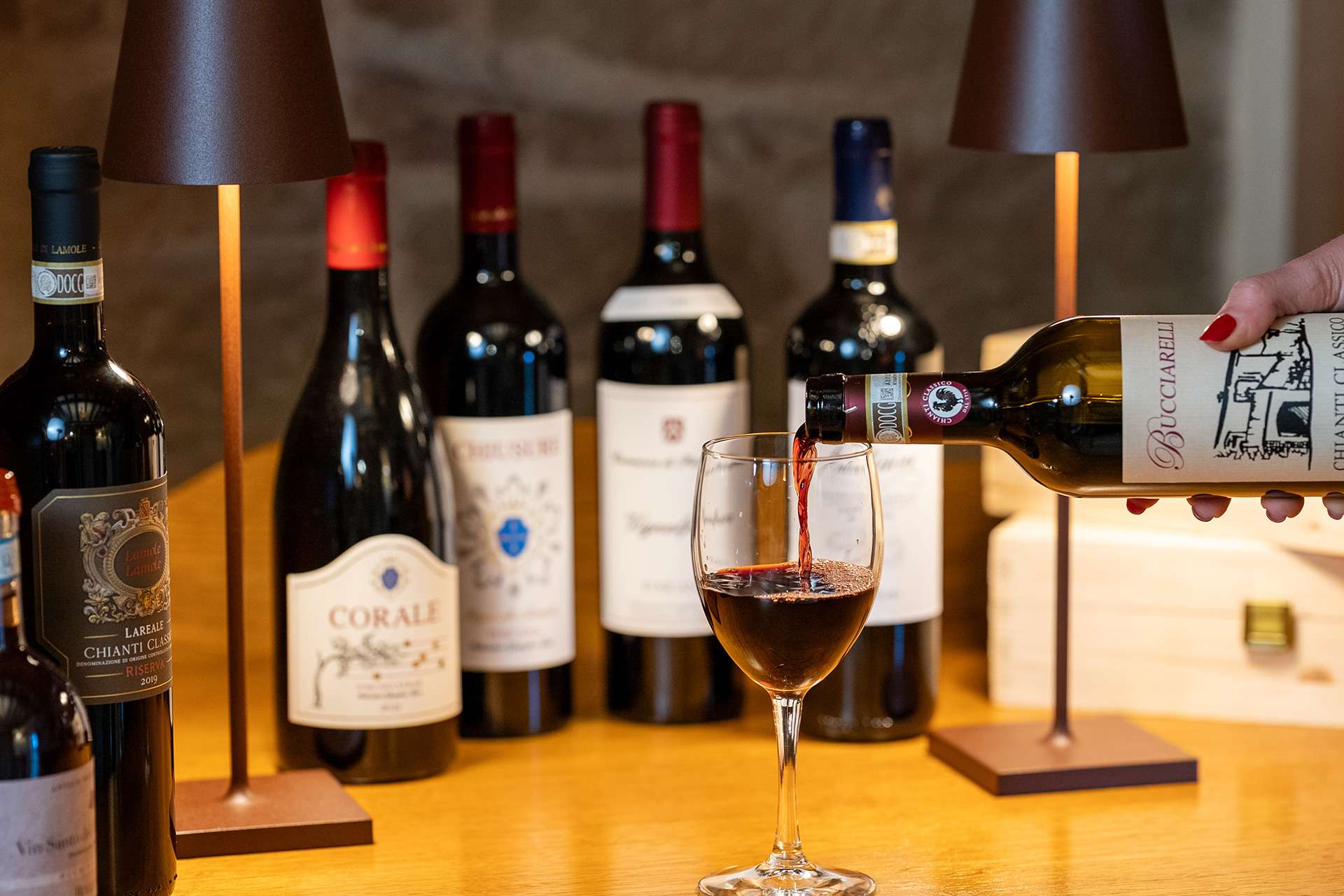
Understanding the many differing facets of Tuscan versus Californian wine can at first seem overwhelming. According to our Local Wine Specialist, Giovanni (Gio) Stella, to understand Tuscan wine, you first have to consider Tuscany’s blend of diverse landscapes and surrounding environment. Tuscany is far more diverse than the postcard image of cypress trees, medieval villages and rolling green hills we’ve come to love.
In California, the same principle applies: to understand its wines, you first have to understand the remarkable diversity of its landscapes and unique microclimates. Compare Napa with Sonoma and you’ll find a striking contrast in both landscape and wine style, not to mention the variety of climates.

Aside from landscapes and climate, the defining differences between Tuscan and Californian wine ultimately come down to history and heritage. Tradition has always played a key role in Tuscany’s winemaking history from as far back as the Etruscan period in the 8th century BCE. Ancient techniques have been preserved and passed down from generation to generation.
According to our Local Wine Specialist, Giovanni (Gio) Stella, who has spent most of his life between the Val d’Elsa (where he was born) and Montalcino, Chianti Classico and the Val d’Orcia, there are some key differences and unexpected similarities to look out for. Read on to discover what makes Tuscan and Californian wines comparable, from taste and style to terroir.
Tuscany’s Unique Geographical Positioning in Central Italy
Tuscany’s central location helps explain its success as a wine-producing region. Situated between the Apennine Mountains and the Tyrrhenian Sea, Tuscany benefits from a Mediterranean climate, providing ideal conditions for winemaking. Its hills, valleys and varied soils create a range of microclimates, helping to shape the distinct character of its wines from one area to the next.

It’s this diversity of landscapes that Giovanni Stella has come to admire about Tuscany. “There are the Apuan Alps and the Apennines, sandy and rocky coastlines, an entire archipelago of islands and mountains rising from the sea,” explains Gio.
“On Elba, Monte Capanne reaches around 3,000 feet. Near Siena, there is even the Accona Desert. More than half of the region – around 53% – is covered by forest. There are rolling hills, rugged mountains and Mount Amiata, an ancient sleeping volcano.” And vines are found almost everywhere. The result is a remarkable patchwork of wine-growing environments, each capable of producing something different.
Yet, despite the region’s diverse landscapes, there is a common thread, explains Gio. “The fil rouge that connects Tuscan wines is Mediterranean in character. It comes from the region's unique position, framed between the warm Tyrrhenian Sea and the warmer slopes of the Apennines.”
As a result, Tuscan wines tend to be “ripe and generous, with a pleasing softness balanced by moderate acidity and vivid tannic structure - a combination that makes Tuscan wines perfect for food pairing,” says Gio.
Tuscan Wines vs. Californian Wines – What Makes Them Different?
Discover a region steeped in ancient history
History plays a key role, with Tuscan wines dating back nearly 3,000 years to the Etruscans, who cultivated vines long before the region became synonymous with Sangiovese, Chianti Classico and Brunello di Montalcino.
Wine has been woven into the landscape and culture of Tuscany for centuries, with traditions evolving alongside the region's diverse soils, climates and communities. “Chianti Classico's identity as a wine region dates back to 1384, and it is literally the seed of almost any other wine region of the world,” says Gio. In contrast, Californian wine is considerably younger than its Italian counterpart.
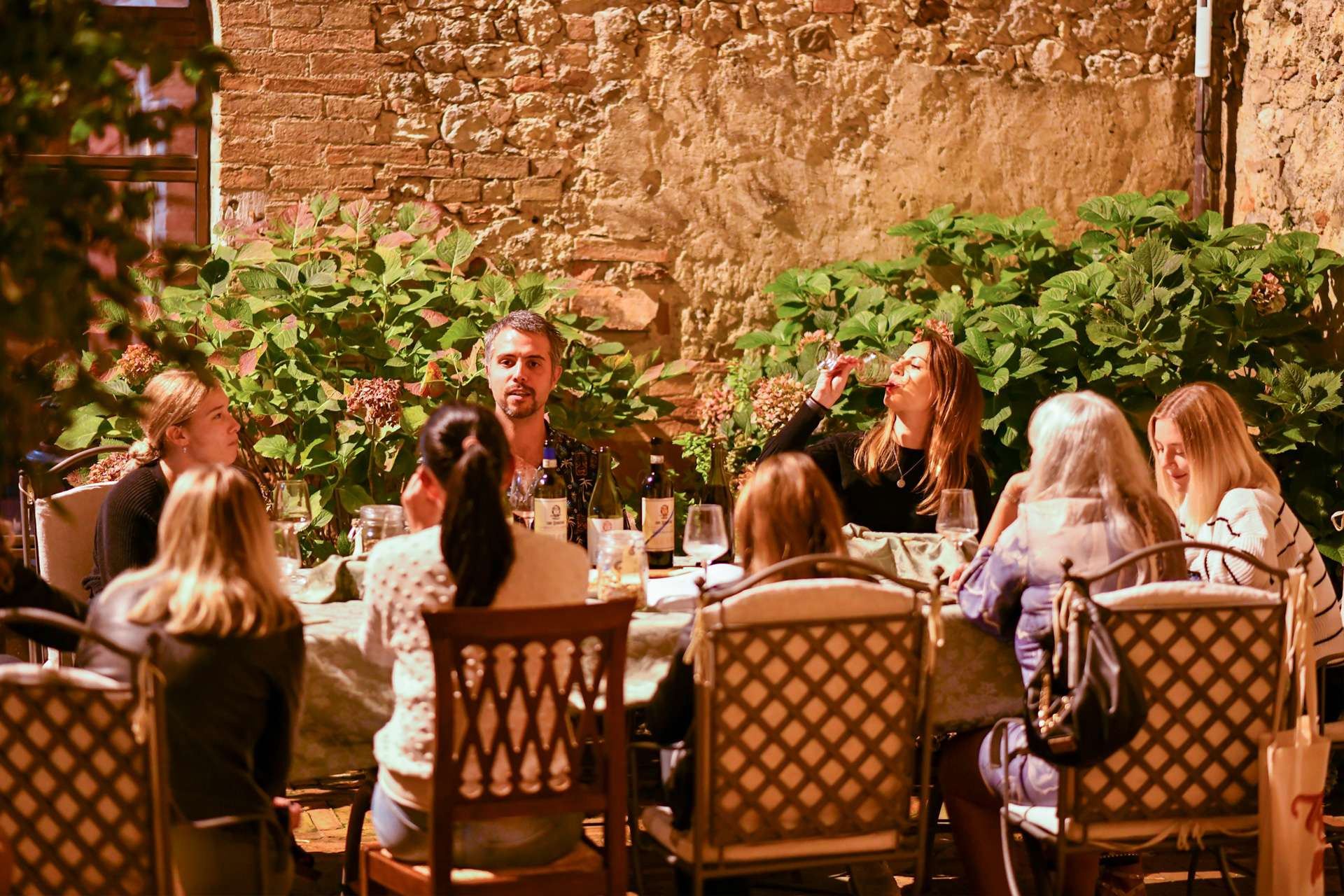
Different landscapes, similar climate
For an American wine drinker accustomed to California wines, the first surprise may be oak profiles, acidity and alcohol content. “Tuscan wines tend to have lower alcohol than California wines,” explains Gio. “Stylistically, we also tend to use a little less oak.”
That said, there are certain similarities between the terroir of Tuscany and certain American wine regions worth noting. “Val d’Orcia and the Tuscan coast, for example, can resemble Northern California, particularly Napa Valley. The landscapes themselves may look quite different, but climatically, there are intriguing similarities,” says Gio. Interestingly, in both places, some of the varieties that perform particularly well are the same – especially the Bordeaux grapes.
Western Virginia compared to Piedmont’s cold carvest
The comparison becomes even more interesting when looking at cooler American regions. “Western Virginia is a cold land where some wineries grow Nebbiolo,” Gio explains. “You can find expressions of that grape there that are not far from the Piedmontese expression in cold harvests.”
The future of Tuscan wine…
Tuscan winemaking is inextricably associated with its deep-rooted heritage. Nevertheless, young winemakers are flourishing across the region, including Tuscany’s “wild west” and the Maremma coast – arguably Tuscany’s most underrated food and wine destination.
Indeed, the Tuscan Coast is not only home to secluded beaches, quieter towns and exceptional cuisine, but also to some of the most sought-after producers of so-called Super Tuscan wines. Unburdened by the past, these ambitious winemakers are adapting to climate change through organic practices.
For Gio, Tuscany’s viticulture is in the midst of an exciting transformation. “It’s an exciting time for Tuscan wine. Creative winemakers are emerging all over the region, who are embracing organic farming techniques and finding increasingly effective ways to manage the challenges posed by global warming.”
FAQs
01. What are the main Tuscan wines?
The four main Tuscan wines to know are Chianti Classico, Brunello di Montalcino, Vino Nobile di Montepulciano and Bolgheri Super Tuscans.
Here’s a personal selection of producers and names to look out for:
In Chianti Classico, keep an eye out for Antinori, Fèlsina, Fonterutoli, Fontodi, Panzanello, Poggerino, Querciabella and Mazzei; for Brunello, look for Barbi, Biondi-Santi, Il Poggione and Piancornello; and for Vino Nobile, explore Poliziano, Boscarelli, Il Macchione and Palazzo Vecchio.
For something particularly special, Bolgheri Super Tuscans are worth saving up for, with Antinori, Frescobaldi and Sassicaia among the names to know.
02. What grape is Tuscany best known for?
Sangiovese is the undisputed ‘king’ of Italian red grapes. It is Tuscany’s signature grape and the foundation of wines such as Chianti Classico, Brunello di Montalcino and Vino Nobile di Montepulciano.
03. What are the similarities between the terroir of Tuscany and certain American wine regions?
According to our Wine Specialist, Tuscany shares some climatic similarities with Northern California, particularly Napa Valley. While the landscapes differ, both can provide ideal conditions for Bordeaux varieties such as Cabernet Sauvignon and Merlot.
In cooler regions such as Western Virginia, grapes like Nebbiolo can also produce wines with similarities to their Piedmontese counterparts during cold harvests. Sonoma grows amazing Pinot Noir similar to some of Tuscany’s cooler mountain regions.
Wine tasting in Tuscany
If you have your sights set on a wine tasting trip to Tuscany, we have a selection of vineyard villas to choose from. Prep your palate through our award-winning Concierge, who can organise immersive cellar tours and structured tastings from the comfort of your villa.